What is scabies?
Scabies is caused by a microscopic mite (Sarcoptes scabiei) that burrows into the skin, laying eggs and causing intense itching. Affects about 200 million people worldwide.
Classic symptoms: severe itching (worst at night), rash between fingers, wrists, ankles, waistline, genitals. Treatment is curative but requires whole-household coordination.
Do I have scabies? Common signs
If most of these describe what you're experiencing, telehealth may be a good next step:
What causes it
Sarcoptes scabiei mites transmitted through prolonged skin-to-skin contact. Less commonly via clothing/bedding. Common in close-contact settings: families, nursing homes, prisons.
Is it contagious?
Yes. Requires prolonged contact in most cases. Common spread within households.
Treat everyone in the household at the same time — and wash all bedding and clothing — otherwise you keep reinfecting each other.
Can it be treated online?
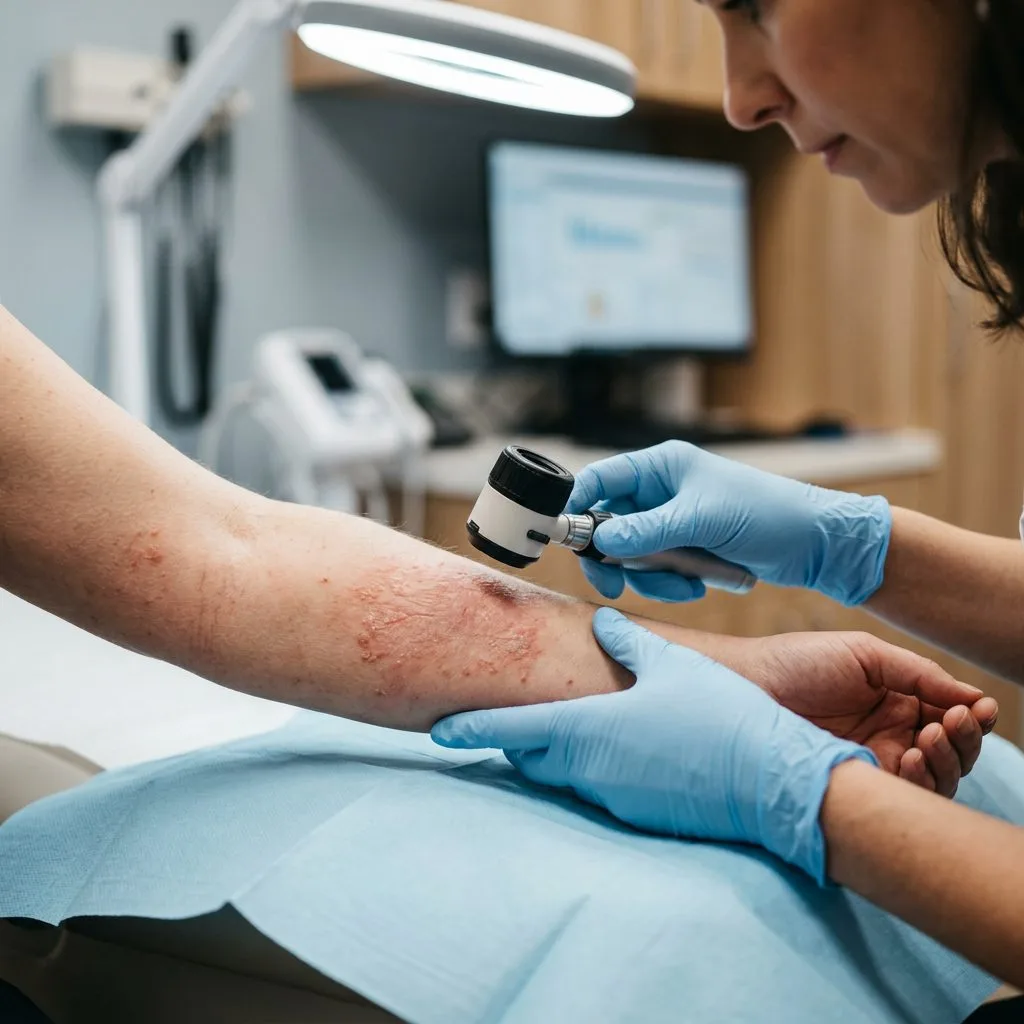
Scabies is well-suited to telehealth — classic rash distribution is recognizable in photos. Crusted (Norwegian) scabies needs in-person care. Extensive secondary infection or treatment failure may benefit from in-person evaluation.
How scabies is treated
Permethrin 5% cream — apply neck-down (head-to-toe in infants/elderly), leave on 8–14 hours, repeat in 7 days. Oral ivermectin (200 mcg/kg, repeated in 1–2 weeks) — convenient alternative, especially for outbreaks. Treat all household members simultaneously even if asymptomatic. Crotamiton as alternative for permethrin-allergic.
Self-care while you wait
- Treat all household members and recent close contacts
- Wash all bedding, towels, clothing in hot water, dry on high heat
- Bag non-washables for 72 hours
- Vacuum mattress and furniture
- Itch may persist 2–4 weeks after treatment — antihistamines help
- Don't share bedding/clothing during treatment
How long does it last?
Mites killed quickly. Itching may persist 2–4 weeks while skin heals.
Frequently asked questions
Can I be reinfected?
Yes — common if family/contacts aren't all treated, or if bedding isn't washed.
How long until I'm not contagious?
After completing treatment — usually 24 hours after first dose.
Why does it still itch after treatment?
Allergic reaction to dead mites and their droppings persists for weeks. Antihistamines and topical steroids help.
Can pets get/transmit scabies?
Pets can have a different mite (sarcoptic mange) but it doesn't sustain in humans — causes brief itch only.
Why are kids' faces sometimes treated?
Infants and young children can have facial involvement. Adults usually treated neck-down.