What is eczema?
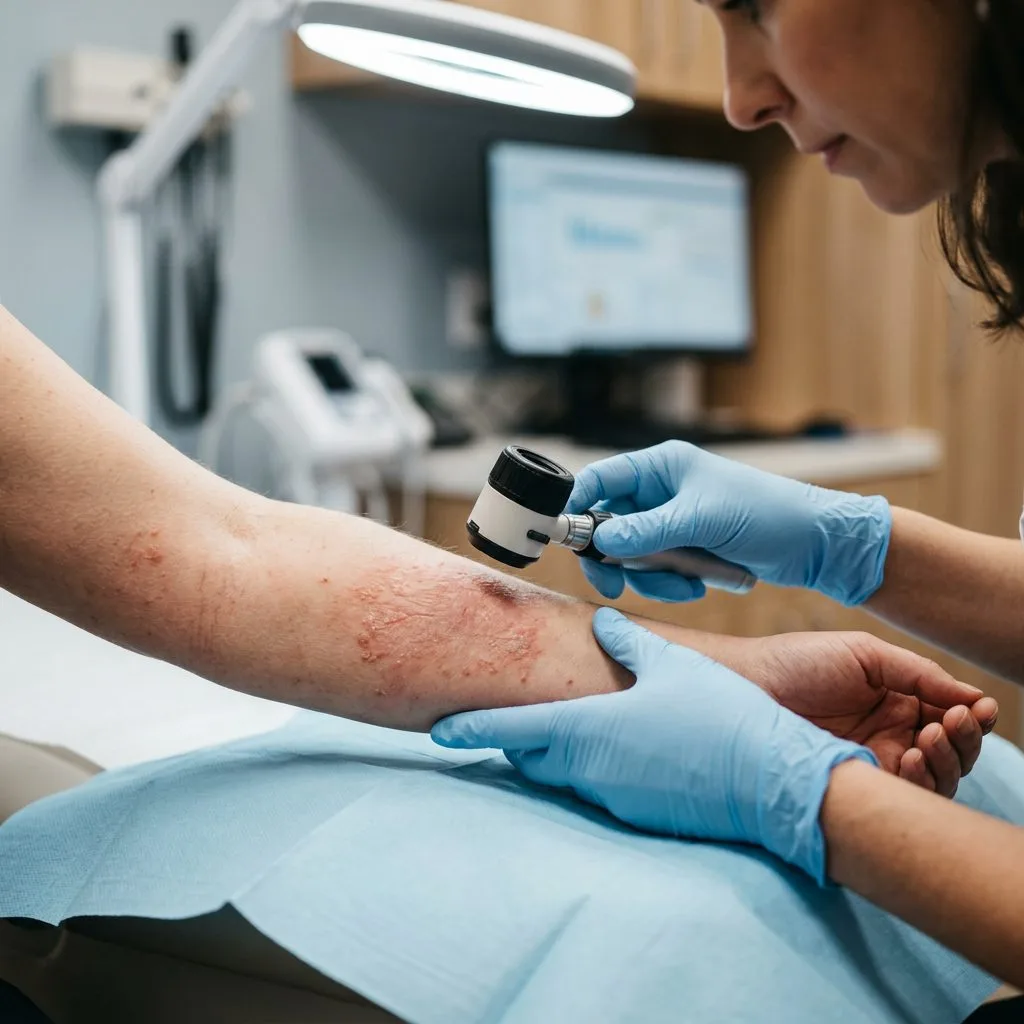
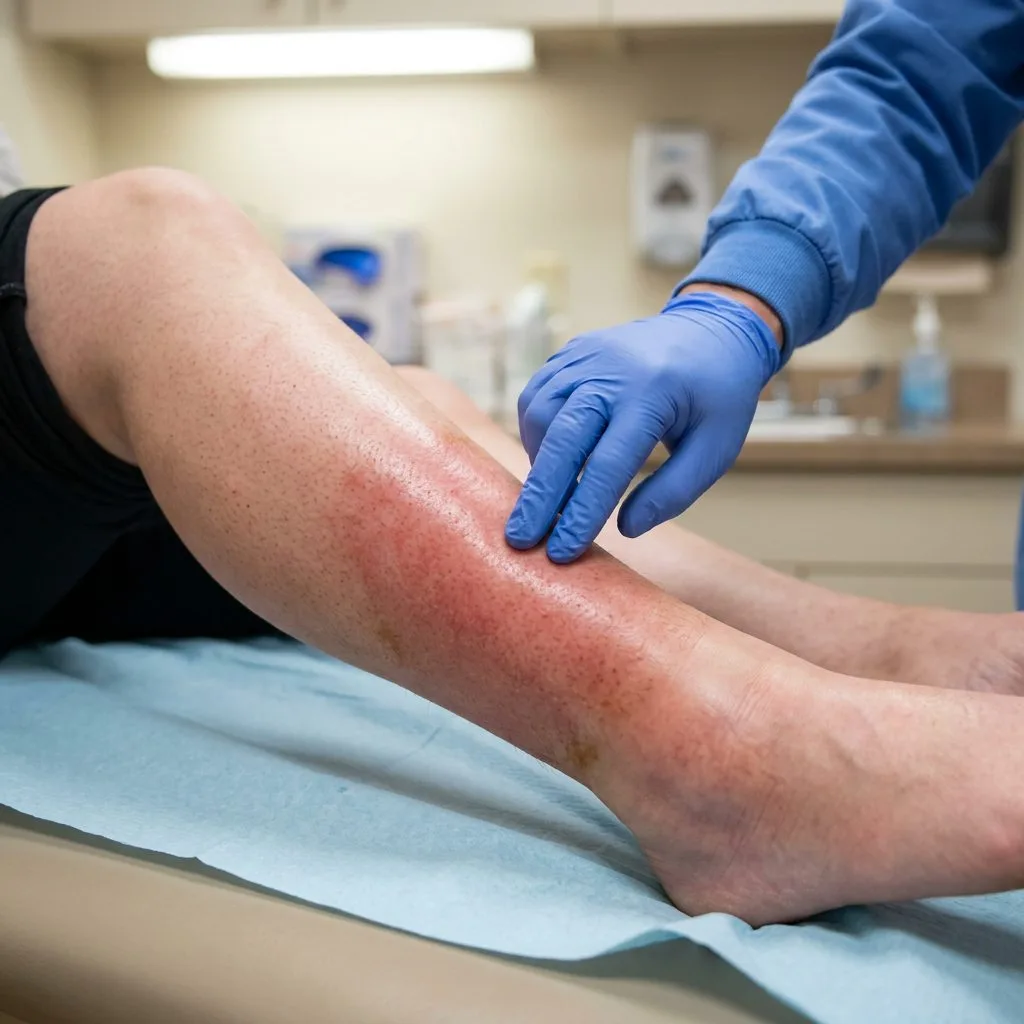
Atopic dermatitis (commonly called eczema) is a chronic inflammatory skin condition characterized by itchy, dry, red patches — often on the flexor surfaces (inside elbows, behind knees) in adults, and on the face and trunk in infants. About 10–20% of children and 1–3% of adults have it.
Eczema is part of the 'atopic triad' along with asthma and seasonal allergies — many people have all three. The underlying issue is a skin barrier that doesn't hold moisture well plus an overactive immune response.
It's chronic but very treatable. The combination of consistent moisturizer use, prescription topicals during flares, and identifying triggers (soaps, sweat, allergens, stress) keeps most cases well-managed.
Do I have eczema? Common signs
If most of these describe what you're experiencing, telehealth may be a good next step:
What causes it
Eczema results from a combination of impaired skin barrier function (often due to filaggrin gene mutations), immune dysregulation, and environmental triggers. Common triggers include harsh soaps, fragrances, wool, dust mites, pet dander, sweat, stress, cold/dry weather, certain foods (in some kids), and infections.
Is it contagious?
No, eczema is not contagious.
The mistake most people make with eczema is reaching for moisturizer only during flares — daily moisturizing is the foundation, even when skin looks fine.
Can it be treated online?
Mild to moderate eczema is well-suited to telehealth — photos make the diagnosis straightforward. A clinician can prescribe topical steroids (potency matched to body area), non-steroid topicals (tacrolimus, pimecrolimus, crisaborole), and antihistamines for itch. Telehealth is NOT appropriate for severe eczema covering large body surface area, infected eczema (yellow crust, fever), or eczema that's failed standard treatments — those may need biologics like dupilumab through dermatology.
How eczema is treated
Topical steroids are the cornerstone of flare treatment — potency is matched to body area (low-potency hydrocortisone for face, higher-potency triamcinolone or clobetasol for thick skin on hands/feet). Tacrolimus and pimecrolimus are non-steroid alternatives, especially for the face. Crisaborole (Eucrisa) is another non-steroid option. Daily thick moisturizers (CeraVe, Vanicream, Vaseline) are essential between flares. Severe cases may need oral medications or biologics — handled in person.
Self-care while you wait
- Moisturize within 3 minutes of bathing — traps water in the skin
- Use thick creams/ointments, not lotions — Vaseline, Aquaphor, CeraVe Healing Ointment
- Short, lukewarm showers — hot water strips lipids
- Fragrance-free, gentle cleansers (Cetaphil, Vanicream, Dove Sensitive)
- Skip wool, stick to cotton
- Keep nails short to limit scratching damage
- Cool compresses for intensely itchy flares
- Humidifier in winter — dry air worsens eczema
How long does it last?
Eczema is chronic with flares and remissions. About half of childhood cases substantially improve by adulthood. Adult-onset eczema tends to persist long-term but is well-controlled with consistent treatment.
Frequently asked questions
Are topical steroids safe long-term?
Yes, when used correctly. Match potency to body area, use the smallest amount that works, and step down to non-steroid options between flares. Thin skin and stretch marks come from inappropriate use — not occasional flare treatment.
Will my eczema ever go away?
Many childhood cases substantially fade by adulthood. Adult eczema tends to persist but is controllable. The goal isn't 'cured' — it's 'well-controlled' with minimal disruption.
Are food allergies causing my eczema?
In kids, food allergies sometimes contribute. In adults, rarely. Aggressive elimination diets are usually not necessary unless there's a clear pattern. Talk to your clinician before trying.
Should I use a moisturizer with steroids in it?
No — those are usually fixed-combo products. Better: apply prescription topical first, then moisturizer on top, daily.
What's the difference between eczema and psoriasis?
Both cause patches but they look and feel different. Eczema is intensely itchy with poorly defined borders; psoriasis is well-defined plaques with silvery scale, often on knees/elbows/scalp. A clinician can tell from photos in most cases.